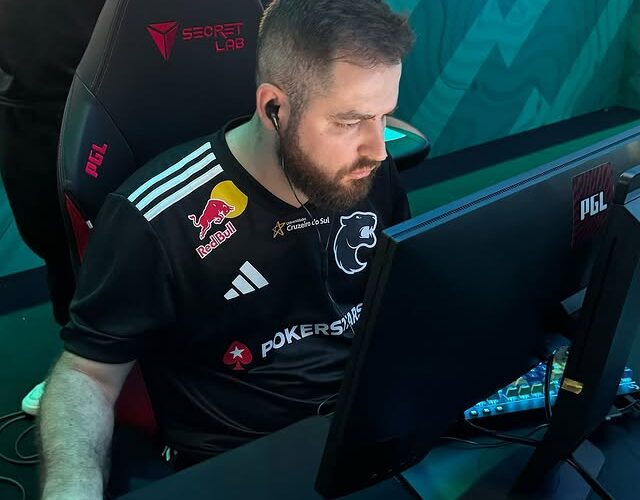
There are moments in esports that feel bigger than the scoreline, bigger than the bracket, bigger than whatever trophy sits on the stage. April 17, 2026, at Farmasi Arena in Rio de Janeiro was one of them. When Gabriel “FalleN” Toledo walked onto the IEM Rio stage and told the crowd he had 247 days left as a professional player, half the arena cried and the other half pretended they weren’t. I was there, three rows from the stage, and I can tell you, my notebook went untouched for almost fifteen minutes because I forgot I was working. For us, this isn’t just a FalleN retirement story. This is the end of the longest single thread in our country’s competitive history, and the beginning of a question nobody in Brazil really wants to answer out loud: what now?
Because here’s the thing about the Professor that gets lost in the highlight reels of those back-to-back Majors in 2016. FalleN isn’t just the captain who put Brazil on the map. He’s the scaffolding. Take him out of the picture, and the question isn’t whether Brazilian CS survives. It’s whether it remembers how to stand up on its own.
The Farewell Itself: What Actually Happened at IEM Rio
Let me paint the scene properly, because the context matters. FURIA was deep in the IEM Rio 2026 playoffs, playing in front of a home crowd that treats them the way Maracanã treats the Seleção. FalleN asked for the microphone before the semifinal. Most people in the arena, including me, assumed it would be a quick pep talk. Instead, he delivered what is probably the most quoted speech in Brazilian esports since the golden SK era.
The numbers he put on the table were staggering. Over two decades in competitive Counter-Strike, with his professional career starting in CS 1.6 back in 2005. Two Major titles with Luminosity and SK Gaming in 2016. A career that has outlasted entire game versions, entire generations of players, entire organizations. And now, a clear endpoint: the end of 2026, wrapped up with FURIA, with a farewell tour that still includes IEM Cologne and a very plausible run at PGL Major Singapore 2026 as the closing curtain.
What struck me most, watching from the floor, wasn’t the announcement itself. It was the language. FalleN didn’t say “I’m leaving CS.” He said he was going to do “other things within Counter-Strike, with CS in my heart.” That’s not a retirement speech. That’s a transition speech. And if you’ve followed his career the way we have down here, you know the difference matters enormously. The teammates standing behind him knew it too. Several of them were visibly crying, but nobody looked shocked. This wasn’t news breaking. This was a chapter closing that everyone inside the bubble had already read.
The FURIA Problem: A Team Built Around a Ghost That’s About to Leave
Here’s where things get complicated for FURIA. The current roster FalleN, yuurih, KSCERATO, YEKINDAR, molodoy is arguably the strongest project the organization has ever assembled. They peaked at #1 in the HLTV rankings in December 2025. They won FISSURE Playground 2, Thunderpick World Championship 2025, IEM Chengdu, BLAST Rivals Fall 2025. They beat Spirit at IEM Kraków. They’re legitimate Major contenders. And the entire structural logic of this lineup rests on two things: molodoy’s AWP as the new engine, and FalleN’s calling as the adapter that makes the molodoy-YEKINDAR-KSCERATO equation actually work.
When FalleN said last year that “molodoy reminds me of s1mple the most”, that wasn’t a compliment thrown at a press conference. It was a thesis. The Kazakh AWPer arrived at FURIA as a star, but he became a generational player under FalleN’s framework. The Brazilian core, yuurih and KSCERATO, spent years operating under arT’s chaos-based system before the Professor rebuilt the team around structure, discipline, and international firepower. That’s two completely different tactical worldviews inside five years, and both times FalleN was the one translating. YEKINDAR, for all his individual brilliance, has never been an IGL and has been very public about not wanting to be one. So FURIA in 2027 has exactly one unsolved equation, and it’s the most important one on the team: who calls the rounds?
The uncomfortable answer is that there’s no obvious internal option. The comfortable answer is that FURIA has nine months to find an external one. Both things are true at the same time, and both are terrifying.
The State of Brazilian Counter-Strike in 2026: Not What You Think
Here’s where I want to push back on the dominant narrative. The international take on FalleN’s retirement has been something like “the end of Brazilian Counter-Strike as a competitive force.” I understand the instinct. But the data tells a more interesting story.
| Team | HLTV Rank (April 2026) | Status |
| FURIA | 8th | Tier 1, Major contender |
| Imperial | 27th | Development project, pushing young talent |
| MIBR | 33rd | Rebuilding with LNZ, venomzera, kl1m |
| paiN Gaming | Outside top 30 | Mixing biguzera with youth movement |
| Fluxo | Mid-tier | Recent signing of exit, still finding identity |
The top-line picture is rough. Only one Brazilian team sits in legitimate tier-1 territory, and that team is the one losing its architect. But underneath, there’s something happening that the HLTV rankings don’t capture well. Imperial has quietly become one of the most important development projects in South American CS, pushing kauez4 and phelps into competitive spotlight. MIBR’s insani has been flagged as a future superstar for three years now, and he’s finally getting the environment to prove it. biguzera at paiN continues to be the most underrated IGL in the region. The problem isn’t that Brazil lacks talent. The problem is that nobody’s gathered them.
The “Last Dance” Blueprint: FalleN Already Showed Us How to Rebuild
This is the part that keeps getting missed in the emotional coverage. In early 2022, when Brazilian CS was arguably in worse shape than it is now, FalleN did something that looked insane at the time. He announced the Last Dance project on January 15, 2022, and by February 18 he had it signed to Imperial: fer, fnx, boltz, VINI, and himself, with peacemaker as coach. Average age over thirty. By competitive logic, a nostalgia play with an expiration date measured in months.
And competitively, that’s exactly what it was. Imperial never became a trophy machine. But that was never really the point, and by 2026 you can see it clearly. The “Last Dance” did something more valuable than winning: it pulled Brazilian Counter-Strike back into the spotlight at a moment when the scene was fracturing, it pumped resources into local scouting, and it cleared the runway for the generation that now occupies FURIA and MIBR 2.0. The Imperial run peaked with an all-time team viewership record of over 1.06 million concurrent viewers at PGL Major Antwerp 2022 according to Esports Charts, with the Portuguese broadcast consistently posting the strongest language-specific numbers at Brazilian-attended Majors. That audience didn’t disappear when the roster did. It transferred to FURIA, to paiN, to MIBR, and it kept the oxygen flowing.
So when FalleN talks about “other things within Counter-Strike”, Imperial is the template. The question isn’t whether he’ll stay involved. The question is which lever he’ll pull, and the options are all interesting: an ownership role (his business track record with Games Academy and the FalleN store is legitimately strong), a coaching seat at FURIA or elsewhere, a broadcast role, or, most intriguingly, a scouting and development structure that formalizes what he’s been doing informally for fifteen years.
The Cultural Weight: Why This Hits Different in Brazil
Here in São Paulo, Rio, Belo Horizonte, kids who are seventeen years old today started playing CS because of FalleN. Not because of the game, because of the man. There’s a reason fans call him Professor, and it isn’t just the AWP tutorials. It’s that he built Games Academy, he wrote open letters about the health of the Brazilian scene, he advocated publicly for tier-1 tournament access when organizers were skeptical Brazilian teams belonged. The man is, in the most literal sense, an institution.
And institutions in Brazil don’t transfer cleanly. We’ve seen this pattern in football, in MMA, in every sport where a single charismatic leader carried an entire generation. When Ronaldo retired, Brazilian football had to reinvent itself, and the transition took nearly a decade. The comparison isn’t perfect, but it’s also not ridiculous. FalleN’s absence isn’t a roster hole. It’s a vacuum in a specific cultural function that nobody else in Brazilian CS currently performs.
The good news? The next generation knows this. When I spoke to sources inside FURIA’s organization last week (and I’ll be careful here about what I can and can’t share), the internal conversation isn’t about replacing FalleN the player. It’s about distributing the functions he performed. The calling goes to one person. The scouting and mentoring goes to a structural role, potentially the Professor himself in a non-playing capacity. The media presence gets handed to KSCERATO and yuurih, who are finally ready for it. It’s not elegant. It’s not going to work perfectly. But it’s thoughtful, and it’s happening.
What to Watch Between Now and December
The 247 days FalleN mentioned from the stage aren’t just a countdown. They’re a test. Here’s what I’ll be tracking through the rest of 2026, and what you should be tracking too.
First, FURIA’s deep runs. The IEM Cologne Major is the first major checkpoint, and PGL Major Singapore is the final one. If this team wins a Major with FalleN in the lineup, the retirement story becomes an all-time mic-drop. If they fall short, the narrative shifts toward FURIA’s 2027 rebuild, and the pressure on whoever replaces FalleN becomes enormous.
Second, the IGL market. There aren’t many free Portuguese-speaking IGLs at tier-1 level, which means FURIA is almost certainly looking internationally. Watch for whispers around LNZ (currently at MIBR and already speaking English in-game), veteran free agents, or a surprise promotion of a Brazilian caller from a lower-tier team.
Third, FalleN’s post-retirement role. If he signs on as coach or general manager at FURIA, that’s a quiet earthquake. If he launches an independent academy or ownership project, that’s a louder one. Either way, the 2027 Brazilian CS landscape depends on which door he walks through.
The Professor isn’t leaving Counter-Strike. He’s just leaving the server. And for everyone in Brazil who grew up watching him, that distinction is the difference between grief and gratitude. On April 17, in that arena, we felt both. By December, we’ll know which one sticks.