The most predictable move Valve has made in years is also the one most likely to destabilize the competitive ecosystem for the next two seasons. Cache is back. And the real question is not whether professional teams will embrace it, but which map loses its seat at the table when they do.
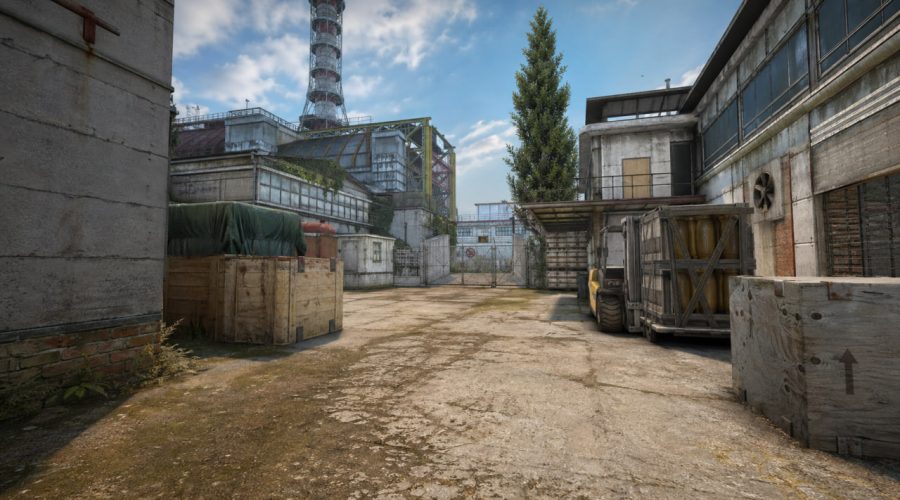
On April 28, Valve officially added the Source 2 rebuild of de_cache to Competitive, Casual, Deathmatch, and Retakes modes in CS2. The update weighed in at 5.1 GB, reflecting a ground-up reconstruction rather than a cosmetic pass. The map is brighter, the dark corners that plagued visibility in late CS:GO are gone, and the classic three-lane structure remains functionally intact. But Cache is not yet in Premier, and it is not in the Active Duty pool. That distinction matters more than the celebration suggests.
The Road Back: How Cache Earned Its CS2 Return in 2026
Seven years is a long time in Counter-Strike. Cache was pulled from Active Duty on March 28, 2019, swapped out for a reworked Vertigo that, to put it charitably, took years to earn the respect Valve assumed it would receive on arrival. In the time since, Cache existed only as a memory, a community talking point, and eventually a Workshop project.
The timeline of its return tells you as much about Valve’s evolving relationship with its community as it does about the map itself. FMPONE (Shawn Snelling), Cache’s original co-creator, released a full Source 2 remake on the Steam Workshop in March 2025. Valve contacted him on the day of release. By May 2025, the acquisition was complete, and the full rights to the map were transferred. One notable absence in the CS2 rebuild: the iconic s1mple graffiti from ESL One Cologne 2016 did not survive the transition. Valve chose not to carry over any legacy graffiti into their Source 2 remakes, and s1mple himself was characteristically unbothered, noting he sees the image every day as a tattoo. The community was less relaxed about it, but the decision appears final.
Then silence, for months, until a radiation symbol emoji on the official CS2 account in January 2026 confirmed what the community already suspected. The final push came in April. FACEIT ran a community vote, and Cache won with 148,840 votes, comfortably defeating both Train and Vertigo. FACEIT added the map to its matchmaking on April 22. Six days later, Valve followed.
None of this was spontaneous. Valve spent close to a year rebuilding Cache for Source 2, and the acquisition-to-release pipeline mirrors almost exactly what happened with Train’s return in early 2025, when the reworked map entered Active Duty in January alongside Premier Season Two. The pattern is now clear: community signal, Workshop proof of concept, Valve acquisition, extended internal development, public release to casual modes, and eventual Active Duty integration after a Major. Cache is currently in phase five.
What the Active Duty Pool Looks Like Right Now
The current seven-map professional rotation consists of Ancient, Anubis, Dust II, Inferno, Mirage, Nuke, and Overpass. Train was removed in January 2026 when Anubis returned for Premier Season Four. That swap itself was notable because Train had lasted only a single year in the pool after entering at the start of 2025, suggesting Valve is becoming more willing to rotate maps aggressively rather than let underperforming entries calcify.
The IEM Rio 2026 statistics exposed just how skewed the current pool has become. Mirage was played 21 times. Dust II appeared 19 times. Ancient managed 9, Inferno 8, Overpass 7, Nuke 5, and Anubis was picked exactly once. That distribution is not a pool in balance. It is two maps propping up a seven-map format while five others serve as niche picks or deliberate curveballs.
Cache entering Active Duty would not merely add variety. It would force a reckoning with which maps actually deserve professional play and which have been coasting on institutional inertia.
Which Map Does Cache Replace?
This is the question that will define the second half of 2026, and the answer is less obvious than it appears.
The Case Against Anubis
Anubis is the most statistically vulnerable map in the pool. A single pick at IEM Rio 2026 is damning, no matter how you frame it. The January 2026 geometry changes were designed to correct its historically T-sided nature, but pro teams have shown limited interest in investing preparation time into a map whose identity keeps shifting under their feet. If Valve is looking for a clean swap, Anubis is the path of least resistance.
The counterargument is that Valve just brought Anubis back in January. Removing it after a single Major cycle would be an implicit admission that the rework failed, and Valve rarely makes those admissions publicly.
The Case Against Dust II
Dust II being played 19 times at Rio is not a sign of health. It is a sign that teams default to it because it demands the least structured preparation. Dust II rewards individual aim over coordinated strategy, which makes it a safe pick for teams that have not done their homework on deeper maps. Removing it would raise the tactical floor of professional CS2 overnight.
But Dust II is Counter-Strike’s identity. It has survived every pool rotation since the game’s inception. The commercial and cultural cost of removing it, even temporarily, may be one Valve is unwilling to pay.
The Case Against Ancient
Ancient was widely understood as Cache’s spiritual successor when it entered the pool in 2021. Same three-lane philosophy, similar emphasis on mid control, comparable site geometry. If Cache returns to do what Ancient was designed to do, but with two decades of community muscle memory behind it, Ancient’s justification weakens considerably.
This is the most likely outcome. Ancient fills the same strategic niche as Cache but lacks the legacy, the community attachment, and the depth of existing utility knowledge that Cache carries. Pro teams would transition off Ancient and onto Cache with relatively minimal disruption to their map pool strategies because the tactical principles transfer.
The Cologne Factor and What Comes After
The expected timeline points to Cache entering Active Duty after the IEM Cologne Major, which runs from June 2 to June 21 in the LANXESS arena. The current Active Duty pool is locked for the Major, meaning teams will play Ancient, Anubis, Dust II, Inferno, Mirage, Nuke, and Overpass in Cologne. Cache integration would logically coincide with the start of Premier Season Five or a mid-summer pool update.
That gives professional teams roughly five to six weeks from now to begin building Cache protocols on FACEIT and Competitive mode, knowing the map will likely enter their tournament rotation by July. Five weeks is not enough time to develop a deep map pool on a map most current rosters have never played professionally. The veterans who remember Cache from its CS:GO era, players like ZywOo, ropz, NiKo, have an intuitive head start, but muscle memory from 2019 will collide with Source 2 physics, updated geometry, and the Animgraph 2 animation overhaul in ways that make old demos unreliable as reference material.
This is where Cache’s return becomes a competitive variable rather than a nostalgic event. Teams that begin structured practice immediately gain a measurable advantage over those who wait for the official Active Duty announcement. The organizations with dedicated coaching staffs and analysts, Vitality, NAVI, MOUZ, will treat Cache as a preparation problem to solve in advance. Everyone else will be reacting.
The Meta Implications Nobody Is Talking About
Cache’s mid control philosophy is fundamentally different from any map currently in the Active Duty pool. The A Main to Squeaky dynamic, the Highway control, the Boost spot, the Forklift anchor position: these create a tempo-based map where rotational speed matters more than utility density. That favors teams built around fast-reading IGLs and flexible riflers over teams that rely on set-piece executions and stacked utility lineups.
In the current meta, that distinction matters. The Mirage-Dust II dominance at Rio 2026 reflects a professional scene gravitating toward aim-centric maps where individual skill can compensate for tactical gaps. Cache occupies a middle ground: it rewards aim, but it punishes teams that cannot read mid control. A team that loses mid on Cache loses the round in a way that is far more absolute than losing mid on Mirage.
The organizations that invest early in Cache-specific setups and defaults will reap disproportionate returns. The organizations that treat it as just another map to veto will find themselves exposed when opponents start forcing it in best-of-three series.
What Cologne Will Actually Tell Us
The IEM Cologne Major will be played without Cache, but the event itself will serve as the last meaningful data point before the pool shift. Watch for which teams are already scrimming Cache behind the scenes, which analysts are building utility guides, and which organizations are quietly adjusting their coaching structures to accommodate an eighth map in preparation cycles.
The real test is not whether Cache belongs in professional Counter-Strike. Seven years of community demand and 148,840 FACEIT votes have answered that question. The real test is whether the current generation of professionals, many of whom built their careers in a post-Cache world, can absorb a map that rewards a style of play the scene has partially forgotten. Cache does not forgive passivity. It does not reward defaults. It rewards reading, rotating, and reacting faster than the other side.
That is either a correction the professional scene desperately needs or a disruption it is not ready for. Cologne will not give us the answer, but it will show us who is already preparing for the question.