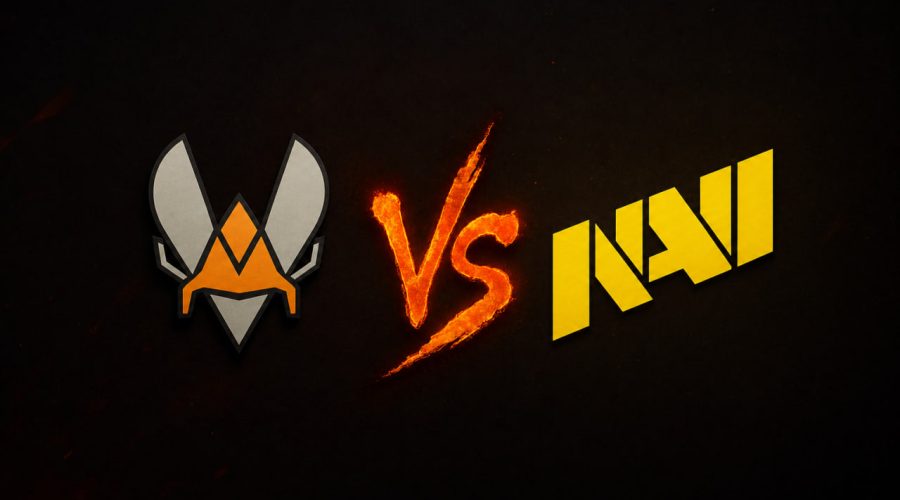
The scoreline reads 3-0. The narrative reads something far more uncomfortable for everyone not wearing a Vitality jersey.
For the second time in five weeks, Team Vitality dismantled Natus Vincere in a best-of-five grand final, this time at BLAST Rivals Spring 2026 in Fort Worth, Texas. The maps told a story of escalating dominance: Nuke 16:12, Anubis 13:11, Dust2 13:3. And yet the most revealing detail was not the final map’s blowout but the first map’s comeback, because it confirmed something about this Vitality roster that goes beyond talent or preparation. They simply do not break.
What the BLAST Rivals 2026 Results Tell Us About the Era
Five trophies in a single season is a number that demands context. IEM Kraków, PGL Cluj-Napoca, BLAST Open Rotterdam, IEM Rio, and now BLAST Rivals in Fort Worth. That is every S-Tier event Vitality have entered in 2026, minus the BLAST Bounty opener where they placed third-fourth. Their playoff map record this year sits at 27 wins in a row. Their grand final map record: 15 consecutive wins. Those are not statistics that describe a good team on a hot streak. Those are the markings of an era that is still accelerating.
What makes the Fort Worth result particularly instructive is how it unfolded. NAVI did not look outclassed in the way some opponents have against Vitality this season. They built an 11-0 lead on Nuke’s T-side, arguably the most dominant single half anyone has produced against this roster at a Big Event in CS2. And then Vitality erased it. Every single round of that deficit, gone. The CT-side response was not panicked aggression but structured, disciplined Counter-Strike that chipped away at NAVI’s economy and confidence in parallel. 16:12 in overtime. That is the kind of scoreline that looks competitive on paper and feels like a demolition in person.
The Nuke Comeback and Its Implications
There is a specific quality that separates teams capable of winning tournaments from teams capable of defining eras: the ability to absorb a worst-case scenario and respond with a best-case one. On Nuke, apEX and his players faced something they had never encountered at a Big Event this season, a double-digit deficit on their own map pick. The natural response for most rosters would be to scramble, to force plays, to chase impact kills. Vitality did the opposite. They reset the economy, held angles, and waited for NAVI to come to them. By the time the score reached 11-8, the momentum had already shifted. By 11-11, NAVI looked like the team trailing.
This is where the coaching structure under XTQZZZ earns its reputation. The mid-game adjustments were not reactive but proactive, cutting off NAVI’s favorite B-site executes and forcing Aleksib into uncomfortable late-round calls. The overtime rounds were a formality by that point.
Anubis: NAVI’s Best Chance, Squandered
If NAVI were going to take a map off Vitality in this series, Anubis was the moment. It was their pick, and they played it well enough to lead 11-9 heading into the final stretch. Four rounds from forcing the series onto a third map with genuine momentum, four rounds from making this a conversation instead of a coronation.
They lost all four.
Vitality closed on a 4-0 run to win 13:11, and the manner of those rounds was telling. No hero plays, no desperation AWP flicks from ZywOo. Just five players executing a system that accounts for exactly this kind of pressure. The mid-round rotations were faster than anything NAVI could counter, and ropz was untouchable in the clutch positions, finishing the grand final with a 1.55 rating, 60 kills to 38 deaths, and an ADR of 81.6 that quietly told the story of the entire series.
The Vitality-NAVI Grand Final: A Pattern, Not a Rivalry
Here is the uncomfortable truth that no amount of competitive optimism can mask: NAVI have not won a single map against Vitality since IEM Cologne 2024. That is 12 consecutive map losses spanning nearly two years, three different tournament formats, and multiple roster iterations on the NAVI side. At some point, the word “rivalry” stops applying. What Vitality have built against the world’s number two team is not a matchup advantage. It is a structural wall.
The pattern is consistent across every meeting. NAVI compete on one or two maps, occasionally leading deep into the second half. And then Vitality find another gear. Whether it is ZywOo landing an impossible shot to break an economy or flameZ anchoring a site hold that should not work on paper, the individual moments always seem to tilt toward the French side at the decisive junctures.
At BLAST Open Rotterdam in March, the score was 3-0. At IEM Rio, 2-0. Now in Fort Worth, 3-0 again. Aleksib spoke before the tournament about how beating Vitality was the only way a trophy would feel truly earned. He was right about the standard. Whether his team can meet it is another question entirely.
Dust2 and the Question of Depth
The third map was the kind of performance that ends debates. Vitality won 13:3, with NAVI managing just two rounds in the entire first half. Dust2 has been Vitality’s signature map for months, and the depth of their read on NAVI’s approach was almost uncomfortable to watch. Every fake was sniffed out. Every default was countered before it could develop. mezii and ropz held angles with the kind of synchronization that only comes from hundreds of hours of preparation, and NAVI’s T-side looked lost in a way it rarely does against anyone else.
This is where the conversation about Vitality shifts from “impressive” to “historically significant.” They are not just beating teams; they are rendering entire map pools unplayable for their opponents. NAVI entered the final with a reasonable veto strategy and still ended up on their worst possible map three. That is not bad luck. That is preparation meeting execution at a level the scene has not seen since the peak Astralis core.
ZywOo, Ropz, and the Problem of Distributed Excellence
The tournament MVP went to ZywOo, his 32nd career MVP award, earned across 11 maps with a 1.34 rating. The numbers are historic in isolation. In the context of this roster, they are almost routine.
But the grand final MVP belonged to ropz, and his performance deserves its own frame. A 1.55 rating in a best-of-five final against the second-best team in the world is not a stat line that happens often. What made it more impressive was the nature of the kills: late-round anchors, retake entries, and the kind of positional discipline that denies opponents any space to work with. Since joining Vitality in January 2025, ropz has become the structural pillar that allows ZywOo to play with freedom. The grand final was perhaps the clearest illustration yet of how that dynamic functions.
This distributed excellence is what makes Vitality so difficult to game-plan against. Shut down ZywOo, and ropz puts up a 1.55. Account for ropz, and flameZ will punish every overrotation. Focus on the riflers, and apEX’s calling adjusts in real time to exploit the gaps. There is no single lever to pull, no tactical shortcut that reduces Vitality to a manageable opponent. Teams have tried everything, from aggressive anti-strats to slow defaults to full map-pool gambles. The results remain the same.
What Comes Next: IEM Atlanta and the Bigger Picture
Vitality skip PGL Astana, which begins later this week, opting instead for IEM Atlanta 2026 starting May 11. The choice of events speaks to a roster managing its calendar with the long view in mind. The IEM Cologne Major looms in June, and apEX has made no secret of the fact that every tournament between now and then is preparation for the one that matters most.
For NAVI, the road is more complicated. They have the talent. w0nderful and makazze are developing into genuine stars, and b1t remains one of the most consistent riflers in the circuit. But consistency at the top of the standings and consistency against Vitality are proving to be entirely different propositions. Aleksib’s system works against everyone else. Against the best team in the world, it continues to fall short in the moments that define series.
The broader question for CS2’s competitive ecosystem is not whether Vitality will keep winning. It is whether anyone is building the kind of roster that can challenge them before the season’s end. Five trophies in, the answer remains unclear. What is clear is that Fort Worth was not a fluke, not an upset, and not even particularly close when measured by the metrics that matter. It was, like so much of this Vitality era, an exercise in inevitability.