
By Anna Sokolova
Everything we know about Miks’ abilities in Valorant points to a controller designed for coordinated aggression, and he has landed at the worst possible time for teams trying to lock in their compositions. Revealed during the Grand Finals of Masters Santiago and released on March 18 with Patch 12.05, the new controller dropped into a meta already destabilized by targeted nerfs to Clove and Yoru. With VCT Stage 1 2026 kicking off across EMEA, Pacific, China, and the Americas over the next three weeks, the question isn’t whether Miks will see play. The question is whether teams have enough time to figure out what he actually breaks.
I’ve spent the past week talking to coaches, watching scrims leak onto social media, and dissecting every interaction in custom lobbies. Here is what I know, what I suspect, and what we should all be watching for when the lights go on in Berlin, Seoul, and Los Angeles.
Who Is Miks? A Full Ability Breakdown
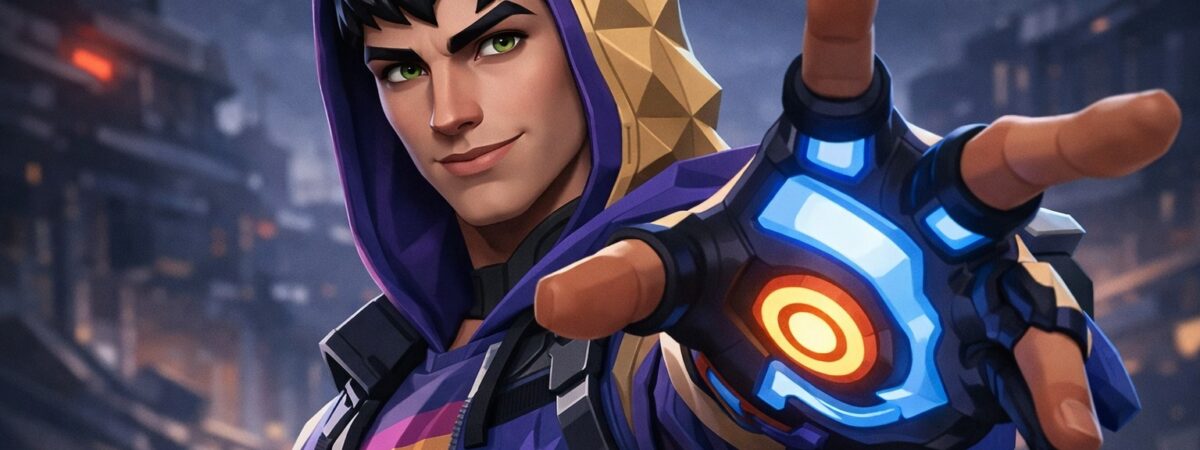
Miks is VALORANT’s 30th agent and the seventh controller on the roster. He is Croatian, built around a sonic-wave theme, and, critically, the first controller in the game’s history capable of healing allies. That alone changes what a controller slot means in any team composition.
Harmonize (Q) — Combat Stim
Miks targets an ally and activates a Combat Stim on both himself and the selected teammate. The buff increases fire rate, movement speed, and weapon handling speed by roughly 10%, lasts 8 seconds, and refreshes on every kill. He can also self-cast it using alt-fire. The refresh mechanic is the key detail here: paired with an aggressive entry fragger, Harmonize creates a snowball effect that rewards teams for winning the first duel in a round.
Cost: 200 credits | Charges: 1
M-Pulse (C) — Dual-Mode Device
A throwable device with two toggleable modes:
- Concuss mode sends out sound waves that stun and disorient enemies in the area of effect.
- Healing mode emits waves that restore HP to allies, including through walls.
The device can be destroyed by enemy fire, which adds a layer of counterplay. But the real power is flexibility: Miks players choose between setting up entries and sustaining teammates after trades, round by round, situation by situation.
Cost: 250 credits | Charges: 2
Waveform (E) — Instant-Deploy Smokes
Miks opens a map-targeting interface and places smokes at selected locations. The smokes are hollow inside (players within can see out), last approximately 16 seconds, and deploy instantly with zero travel time. That’s longer than Clove’s and second only to Brimstone and Harbor.
Cost: 150 credits per additional smoke (1 free per round) | Charges: 2 | Cooldown: 40 seconds
Bassquake (X) — Sonic Radiance Ultimate
Miks channels and unleashes a cone-shaped burst of sonic energy forward, knocking back enemies while applying Deafen (8 seconds) and Slow simultaneously. The shape and impact are comparable to Breach’s Rolling Thunder, but without the gradual rollout.
Cost: 8 ultimate points
Miks Ability Comparison: How He Stacks Up Against Existing Controllers
| Feature | Miks | Brimstone | Clove | Omen |
| Smoke duration | ~16 sec | ~19 sec | ~13.5 sec | ~15 sec |
| Smoke deploy speed | Instant | Short delay | Instant | Moderate delay |
| Smoke type | Hollow | Solid | Solid | Hollow |
| Healing | Yes (M-Pulse) | No | No | No |
| Combat Stim | Yes (Harmonize) | Yes (Stim Beacon) | No | No |
| Crowd control | Concuss + Knockback | Incendiary | Meddle (decay) | Paranoia (nearsight) |
| Post-death utility | None | None | Smokes + Meddle | None |
The table tells a clear story. Miks trades the post-death safety net that made Clove dominant for raw versatility while alive. He can smoke, stim, concuss, and heal within the same round, but once he’s gone, his utility goes with him.
How Patch 12.05 Changes Reshape the Controller Landscape
Miks doesn’t arrive in a vacuum. Valorant Patch 12.05 delivered significant nerfs to two of the most picked agents in professional play, and the combined impact is what makes this meta shift so consequential.
Clove Nerfs
- Ruse (post-death smoke): Duration reduced from 14 seconds to 6 seconds.
- Meddle: Area of effect reduced from 6 meters to 4 meters.
The Ruse change is devastating. Clove’s entire identity in competitive play was built on providing value from beyond the grave. A 14-second smoke after death gave teams an enormous safety margin on retakes and post-plant situations. At 6 seconds, that margin effectively disappears. The Clove nerf in 2026 doesn’t kill the agent entirely, but it strips away the mechanic that justified Clove’s near-permanent presence in pro compositions.
Yoru Nerfs
- Gatecrash: Beacon duration halved from 30 seconds to 15 seconds.
- Blindside: Maximum charges reduced from 2 to 1.
Yoru had been bleeding into initiator and even sentinel territory for months. Losing a flash charge and halving his teleport window forces Yoru players to be far more deliberate. He’s still viable, but no longer the universal flex pick that warped team compositions around him.
Skye Buff
- Guiding Light: Flashes are once again rechargeable, with a 60-second cooldown between charges.
This is a quiet but meaningful shift that opens initiator options back up now that Yoru no longer monopolizes the flash initiator slot.
Miks’ Competitive Viability: Where He Fits in VCT Stage 1
Let me be direct: I don’t think Miks will be a universal first-pick in the opening weeks of the VCT Stage 1 2026 meta. The agent has been live for less than a week, and professional teams have had barely any meaningful practice time. But dismissing him entirely would be a mistake, especially given how the rest of the patch reshapes what’s available.
The case for immediate adoption
- He fills the gap Clove leaves behind. Teams that relied on Clove’s post-death utility now have a weakened version of that agent. Miks offers an alternative that’s arguably stronger while alive, particularly on maps requiring fast executes.
- Instant-deploy, 16-second hollow smokes are elite. For coordinated site takes, the speed advantage over Brimstone and the duration advantage over Clove make Waveform immediately competitive.
- Healing from the controller slot is unprecedented. Teams that previously needed Sage or Skye for sustain can now embed healing directly into their smoke player, freeing a roster spot for a more aggressive or utility-heavy pick.
The case for caution
- No post-death value. Unlike Clove, Miks contributes nothing once eliminated. In chaotic ranked games and even in some professional metas, that trade-off can be punishing.
- Harmonize requires coordination. The Combat Stim’s kill-refresh mechanic is designed for structured team play. In solo queue or with poor communication, much of its value evaporates.
- Limited stalling power. Miks cannot slow a push the way Viper’s wall or Omen’s Paranoia can. His concuss from M-Pulse is destroyable and situational.
Best maps and compositions for Miks
Miks thrives on maps with defined choke points and multi-angle site entries where instant smokes and pre-entry concuss make a tangible difference. Ascent, Haven, and the returning Lotus (with its reworked A-site) stand out as strong picks. On wider, rotation-heavy maps like Breeze, he’s better suited as a secondary controller alongside Viper or Harbor.
The ideal pairing is with aggressive duelists. Neon, Jett, and Raze all benefit enormously from Harmonize’s Combat Stim on entry, and the M-Pulse concuss creates opening opportunities that previously required a dedicated initiator.
Teams to Watch: Who Adapts First?
EMEA (starts April 1, Berlin)
The EMEA region enters Stage 1 with a storyline that goes beyond the patch. Eternal Fire have stepped into VCT EMEA after Riot terminated ULF Esports’ partnership slot due to operational failures, including reported non-payment of players and staff. The Turkish org retained most of the Ascension-winning ULF core alongside original member Izzy. Their first match is against Fnatic on April 1, and as a newly elevated roster playing their first official VCT match, they have less institutional resistance to experimenting. Don’t be surprised if they’re among the first to test Miks in a competitive setting.
NAVI enter 2026 with a rebuilt roster featuring Shao, hiro, Ruxic, sociablEE, and Filu, coached by ANGE1. NAVI’s struggle to qualify for international events over the past two seasons creates urgency. A coach with ANGE1’s tactical reputation is exactly the type to explore whether Miks can unlock new composition flexibility, especially on maps where NAVI’s previous controller play fell short.
Pacific (starts April 3, Seoul)
The region that just produced a Masters champion in Nongshim RedForce is the most likely to be conservative. NSR’s dominant, undefeated run through Santiago was built on an aggressive double-duelist meta headlined by Neon and Yoru. With Yoru now nerfed, they’ll need to adjust regardless, and Miks’ Combat Stim synergy with Neon could be the natural pivot.
Paper Rex, historically the region’s most willing experimenters, are the obvious candidates to debut Miks early. Their identity has always been built around speed and unpredictability, and Miks’ kit rewards exactly that philosophy.
China (starts March 31)
China Stage 1 opens before any other region, giving teams like EDward Gaming the first live look at how the post-12.05 meta plays out on stage. The region saw fewer offseason roster shakeups than EMEA or Americas, which could translate into faster adaptation to the new controller options. Whether any Chinese squad takes the risk on Miks in week one is an open question, but a region known for disciplined, methodical compositions may be slower to experiment than Pacific or EMEA counterparts.
Americas (starts April 10, Los Angeles)
With the latest start date, Americas teams have the most preparation time. Sentinels rebuilt around a younger core for 2026 and may view Miks as a way to differentiate early. LOUD and MIBR both favor structured play that could extract value from Harmonize and coordinated M-Pulse usage.
How to Play Miks: Tips for Competitive and Ranked
On attack
- Pair Harmonize with your entry fragger. The kill-refresh mechanic turns first bloods into sustained aggression across an entire site execute.
- Use M-Pulse in concuss mode before entry. Throw it into common holding angles to force defenders into a lose-lose: shoot the device and reveal their position, or eat the stun.
- Deploy Waveform smokes at the exact moment of entry. The instant activation means you can hold smokes until the last second, giving the defense less time to react.
On defense
- Switch M-Pulse to healing mode for post-fight sustain. After your team takes an early trade, a well-placed healing M-Pulse can recover enough HP to hold the site through a second wave.
- Play mid-map to maximize smoke range. Waveform’s map-targeting UI lets you cover either site from a central position, but only if you’re alive to use it.
- Save Bassquake for retakes. The cone-shaped knockback clears post-plant positions more effectively than almost any other single ability in the game.
General tips
- Hollow smoke awareness is critical. You can stand inside Miks’ smokes with full visibility while enemies outside are blind. Use this for off-angle holds and unexpected peeks.
- Don’t waste M-Pulse charges early. With only two per round and no recharge, every deployment matters. Save at least one for the critical fight.
- Communicate Harmonize targets. A stimmed duelist who doesn’t know they’re buffed won’t play to maximize the advantage.
FAQ
Is Miks available in VCT Stage 1 2026?
Miks launched with Patch 12.05 on March 18, 2026. Since VCT China Stage 1 begins March 31, EMEA on April 1, Pacific on April 3, and Americas on April 10, the agent will have been live for a minimum of two weeks before any professional match. Riot has not announced any restrictions on his competitive availability, so barring a last-minute ruling, expect him to be eligible from day one.
Will Miks replace Clove in the competitive meta?
Not outright, but the
Clove nerf in Valorant 2026
dramatically narrows the gap. Clove still offers unique post-death value, but at 6 seconds instead of 14, teams need to weigh whether that diminished upside justifies picking them over Miks’ superior alive-state utility. On maps requiring fast executes and team sustain, Miks may prove to be the stronger choice.What role does Miks fill beyond controller?
Miks functions as a hybrid controller-support. His healing through M-Pulse and Combat Stim through Harmonize give him capabilities previously reserved for initiators and sentinels. In team compositions that want to consolidate utility into fewer agent slots, Miks can absorb responsibilities that would otherwise require a Sage, Skye, or Brimstone.
Is Miks viable in solo queue?
Viable, yes. Optimal, not always. Harmonize loses significant value without a coordinated duo partner, and M-Pulse healing requires teammates to position within its radius. His smokes and Bassquake ultimate still function independently, but Miks’ ceiling is tied directly to how well your team communicates.
How does Miks counter aggressive compositions?
M-Pulse in concuss mode punishes fast pushes through chokepoints. Bassquake’s knockback and deafen break the momentum of any coordinated rush. Against teams running Neon or Jett entries, a well-timed Bassquake can single-handedly reset a round.
What are the best agents to pair with Miks?
Aggressive duelists like